The Upstream Move Most Celebrities Miss
The standard celebrity production company model works like this: a famous actor, athlete, or musician uses their industry relationships to attach themselves to projects already in development — scripts that studios have optioned, shows that networks have greenlighted, films that have financing and need a name for the poster. The celebrity producer collects a fee, sometimes an executive producer credit, occasionally a backend participation that rarely pays out. The actual creative control and IP ownership lives elsewhere.
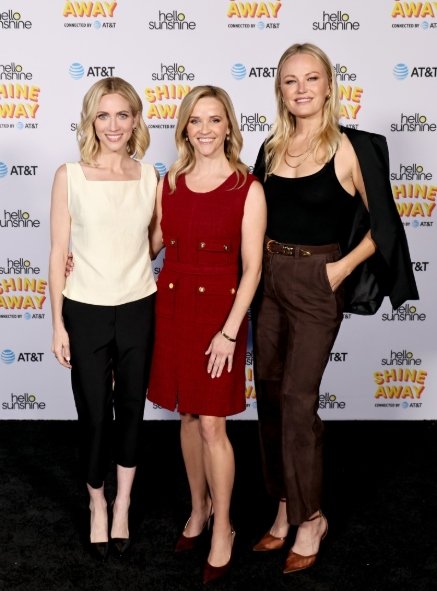
Reese Witherspoon took a structurally different position when she co-founded Hello Sunshine in 2016. Rather than waiting for Hollywood to develop female-skewing stories and then attaching her name to them, she built a company whose core business was identifying that IP before Hollywood got there. Hello Sunshine optioned books — particularly commercially ambitious literary fiction and narrative nonfiction with female protagonists and broad audience appeal — before the studios were bidding on them. The company owned the option, controlled the adaptation rights, and brought the package to streaming platforms and studios from a position of ownership rather than attachment.
This is not a minor operational distinction. It is the difference between being a vendor to the entertainment industry and being a supplier to it. Vendors get paid for their time and their name. Suppliers own something the industry needs and negotiate from a position of scarcity. Hello Sunshine built its business model around creating that scarcity — finding the books that would become the next cultural conversation pieces before the conversation started.
The Flywheel: How It Actually Worked
The Hello Sunshine business model had a compounding logic that took several years to become fully visible. Reese's Book Club — launched in 2017, initially as a simple Instagram feature — became one of the most commercially powerful book recommendation platforms in publishing. A Book Club selection could add tens of thousands of sales to a title in days, which gave Hello Sunshine significant leverage with authors and their agents: selecting a book for the club while simultaneously holding the option on adaptation rights created a mutually reinforcing commercial outcome for everyone involved.
Authors wanted the book club exposure. The book club exposure drove sales. Strong sales validated the commercial appetite for the story. Strong commercial appetite made the adaptation rights more valuable to streaming platforms. And the entire flywheel started with Reese's cultural authority — her credibility as a reader and tastemaker with a specific, loyal, commercially valuable audience of women aged 25–55.
The Big Little Lies adaptation (HBO, 2017) demonstrated the model at scale. Reese optioned the Liane Moriarty novel, produced the series, starred in it, and collected both the creative and commercial upside of a property that became a cultural moment. She was not attached to a project someone else owned. She owned the project and brought in the partners. The distinction made her a producer in the fullest sense rather than a celebrity lending credibility to someone else's development slate.
What Blackstone Was Actually Buying
When Blackstone acquired Hello Sunshine in August 2021 for approximately $900 million, the transaction was widely reported as a celebrity production company deal. That framing missed the more important story. Blackstone is a private equity firm that deploys capital where it sees durable cash flow and defensible competitive position. They do not pay $900 million for celebrity vanity projects.
What Blackstone acquired was a systematic capability to identify commercially viable female-skewing IP ahead of the market's pricing of it. Hello Sunshine had demonstrated, repeatedly and at scale, that it could find stories — in book form, before Hollywood was bidding on them — that would translate into high-performing streaming content for the demographic that represents the most consistent entertainment consumer: adult women with disposable income and strong social networks for driving word-of-mouth.
That capability — the editorial taste, the industry relationships, the Book Club distribution platform, the option pipeline — was the asset. Reese's name and ongoing creative involvement were important components of the asset, but the institutional value was the pipeline architecture. Blackstone believed (correctly, by available evidence) that the Hello Sunshine model could be scaled, replicated across additional IP categories, and operated with returns that justified a $900 million entry price.
Reese's equity in Hello Sunshine at exit generated a reported personal return in the hundreds of millions of dollars. That outcome was a consequence of the upstream model — not just the celebrity production deal, not just the talent attachment, but the IP ownership position that made Hello Sunshine worth acquiring rather than simply working with.
How Hello Sunshine Differs From the Field
Will Smith's Westbrook Studios, Kevin Hart's Hartbeat Productions, and a dozen other celebrity production companies operate on a fundamentally different model from Hello Sunshine. They are talent-first businesses: the celebrity is the asset, projects are selected for their fit with the celebrity's existing brand, and the company's value rises and falls with the celebrity's cultural moment.
Hello Sunshine was IP-first. The company's value resided in its acquisition pipeline, its editorial capability, and its platform relationships — assets that would have retained most of their value even if Reese had stepped back from active involvement. This distinction is what made the Blackstone transaction possible. Private equity cannot acquire a talent-first business at scale because the asset — the celebrity — cannot be transferred. But it can acquire an IP business with a strong operator and founder in a continuing role, because the business infrastructure has standalone value.
This is the model distinction that matters for celebrities thinking about building something durable. A company built around your name is valuable while your name is hot. A company built around a capability your name helped establish — a taste platform, an acquisition methodology, a community relationship — is valuable in ways that outlast the cultural moment that funded it.
The LatAm Entertainment Lesson
The entertainment industry across Latin America is producing some of the most commercially significant IP in global media. Telenovela formats, narco-corrido music narratives, family saga fiction, crime journalism that crosses into literary nonfiction — there is a generation of stories in the LatAm market that global streaming platforms are actively seeking and frequently failing to find because the acquisition infrastructure does not yet exist at the scale Hello Sunshine built for English-language female-skewing content.
A LatAm celebrity with genuine cultural authority and the right editorial orientation has the opportunity to build the Hello Sunshine equivalent for Spanish and Portuguese-language IP — to become the upstream acquisition platform that global streamers, publishers, and distributors will want to partner with because the talent for identifying commercial stories in that market is concentrated and proven. That is not a performance business. It is an IP business. And IP businesses compound in ways that performance careers cannot.
The Starpower angle connects to this directly. Brand IP and celebrity IP are both forms of intellectual property that compound when held and managed correctly. A beauty brand founded by a LatAm celebrity is IP. The cultural associations the brand builds over time are IP. The formulation relationships, the community, the story of why the brand exists — these are assets that appreciate if the business is built correctly and positioned for the kind of institutional interest that paid $900 million for a book club and an option pipeline.