The Portfolio Nobody Predicted
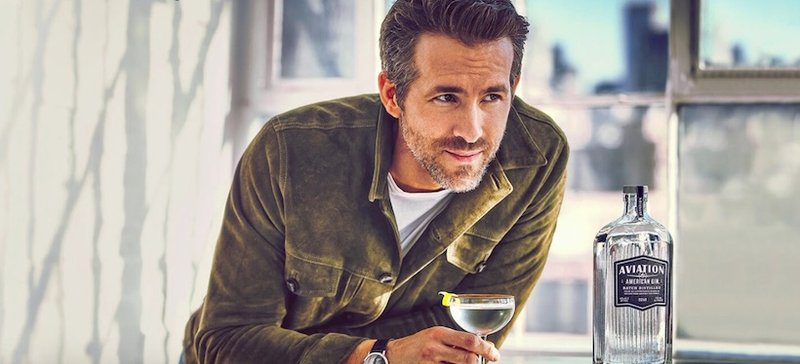
In 2018, Ryan Reynolds acquired a minority stake in Aviation Gin. It was framed as a celebrity investment, the kind of brand equity play that gets a press release and a few Instagram posts. What followed was something structurally different. Diageo acquired Aviation Gin in 2020 for up to $610 million — $335M upfront plus up to $275M in earnouts over ten years. Reynolds held equity. He did not hold a royalty deal. He held equity.
The Mint Mobile story is even cleaner. Reynolds invested in the prepaid wireless brand, became its primary creative force, and in 2023 T-Mobile acquired Mint Mobile in a deal valued at approximately $1.35 billion. Reynolds's stake, by multiple estimates, produced a nine-figure return on an investment that began as a relatively modest equity position. These are not numbers you generate from endorsement rates, no matter how famous you are.
Add the Wrexham AFC acquisition alongside Rob McElhenney in 2020 — purchasing the Welsh football club for roughly $2.5 million — and the subsequent Welcome to Wrexham documentary on Disney+ which generated tens of millions in earned media coverage, drove global brand awareness for the club, and turned a League Two side into a cultural moment with international broadcast rights and a merchandise operation that grew from near-zero. Add an Alpine Formula 1 team stake. The portfolio is not a collection of bets. It is a system.
Maximum Effort Is the Real Asset
The through-line connecting every Reynolds brand is Maximum Effort, the creative agency he founded. Maximum Effort does not operate like a traditional agency. It operates as an in-house production operation where the output is advertising designed to function as entertainment — content people share voluntarily, content that earns media coverage because it is genuinely interesting, content where the distribution cost approaches zero because the audience does the distributing.
The Aviation Gin ad responding to the Peloton controversy — produced and aired within hours of the original Peloton ad generating backlash — is the canonical example. It cost a fraction of what a traditional media buy would cost to reach the same audience. It earned coverage from every major publication. It demonstrated that if your creative is compelling enough, you don't need to buy distribution. You generate it.
This is the insight the celebrity world consistently underprices: the celebrity is not the endorser. The celebrity is the CMO, the creative director, and the distribution channel simultaneously. When those three roles collapse into one person operating through an owned entity, the economics of brand-building change fundamentally.
The Math That Endorsement Deals Cannot Produce
Consider a LatAm celebrity with 40 million social followers. At current market rates for a talent of that reach and engagement, annual endorsement revenue from beauty and lifestyle categories might total $400,000 to $600,000 — call it $500,000 per year. That income is linear. It does not compound. It does not build equity. When the contract ends, the asset value is zero.
Now deploy that same audience behind an owned brand. A celebrity-anchored beauty brand at accessible premium pricing ($15-35) reaching even 0.1% of that 40 million follower base annually — 40,000 customers — at a $50 average order value generates $2 million in revenue. At 40% margin, that is $800,000 in EBITDA in year one. At a 6x EBITDA multiple, the business is already worth $4.8 million, nearly ten times the annual endorsement fee.
Now run that forward seven years with conservative growth assumptions — 25% year-over-year, achievable for a well-positioned brand with a real category thesis and engaged distribution. By year seven, revenue approaches $10 million. EBITDA at 40% is $4 million. At a strategic exit multiple of 8-10x for a brand with celebrity founder equity and category authority, the business value is $32-40 million. A cumulative endorsement strategy over the same seven years, assuming the celebrity maintains relevance and rates hold, generates roughly $3.5 million. The owned brand, at conservative assumptions, generates ten times the financial outcome — plus the celebrity owns an asset that continues compounding even after they stop being its primary face.
The LatAm Parallel
What Reynolds built with Maximum Effort is a formalized version of what LatAm celebrities already have. The infrastructure is different — it lives in social media ecosystems, in press relationships that have been cultivated across decades of careers, in fanbases that track product use and lifestyle choices with a level of attention that no traditional media buy can manufacture. But the functional capability is identical.
A Brazilian celebrity with a dedicated audience across Instagram, TikTok, and YouTube has the ability to launch a product and generate first-week awareness that a brand without that distribution would spend millions trying to replicate. A Colombian actress whose skincare routine her followers have watched and discussed for years has established category authority that takes traditional brands a decade of advertising to approximate. These are not soft assets. They are the same infrastructure Reynolds formalized through Maximum Effort — just not yet deployed into owned equity positions.
The question is not whether LatAm celebrities have the distribution capability. They demonstrably do. The question is whether they deploy it into owned brands or continue licensing it to other companies' products via endorsements — continuing to build equity for brands that will eventually be sold at multiples the celebrity will never see.
The Korean Manufacturing Advantage Reynolds Didn't Have
One structural advantage available to LatAm celebrity brands today that Reynolds did not have in the spirits or wireless categories: Korean ODM manufacturing. Korea's top-tier OEM/ODM houses — the same labs that power the world's most recognized K-beauty brands have collectively industrialized the celebrity beauty brand launch. They manufacture for some of the world's most recognizable beauty brands. They carry regulatory compliance across multiple markets. They can bring a product to market in six months at minimum order quantities that make the financial model viable from day one.
This removes the hardest part of brand-building for someone who is not a product developer. Reynolds had to navigate the actual operational complexity of running a gin distillery and a wireless carrier — businesses with significant capital requirements, regulatory overhead, and operational complexity. A celebrity beauty brand, built on Korean ODM manufacturing with a focused SKU count, can operate at a fraction of that complexity while accessing the same fundamental economic model: owned equity that compounds.
The playbook Reynolds wrote across a decade of portfolio construction is now executable in beauty in eighteen months. The manufacturing infrastructure exists. The distribution model is proven. The only remaining question is which celebrities will be the first to claim category authority in their markets — and which will look back from the endorsement economy wishing they had moved earlier.
What the Reynolds Model Actually Teaches
The lesson is not "be funny on social media." The lesson is structural. Reynolds understood that the celebrity's scarcest resource is not fame — it is authentic creative control applied consistently to owned assets rather than rented ones. Every piece of content Maximum Effort produces for Reynolds's brands builds equity in those brands. Every endorsement a celebrity does for another company's brand builds equity in that company. The mathematical destination of those two paths, compounded over a decade, is not comparable.
Wrexham is perhaps the purest illustration. A Welsh football club was, by any financial analysis, a difficult asset. The documentary didn't just market Wrexham — it turned the club into a media property with global reach, earned coverage worth orders of magnitude more than any traditional sports marketing budget, and created a brand that now sells merchandise on five continents. The club's valuation has increased by multiples since acquisition. The mechanism was the same one Reynolds applied to gin and wireless: make the brand the media, make the media earn its own distribution, and let the audience do the scaling.
That mechanism is available today, in beauty, in LatAm, with better manufacturing infrastructure than Reynolds had access to in any of his categories. The category authority positions are unclaimed. The manufacturing partners are ready. The only thing missing is founders who understand that they are building an asset, not doing a campaign.