It Started as a Personal Supply Problem
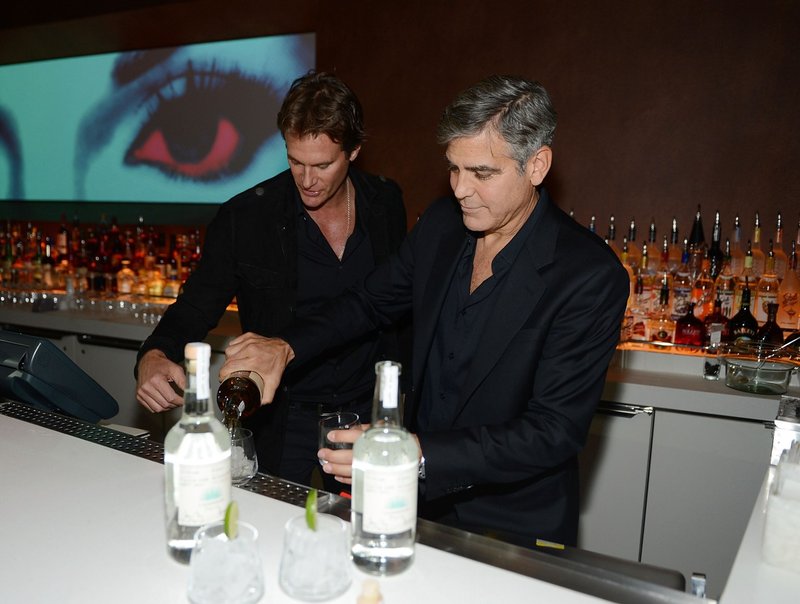
The origin story of Casamigos is almost aggressively un-businesslike, which is part of what makes it instructive. George Clooney and his friend Rande Gerber — hospitality entrepreneur and husband of Cindy Crawford — had adjacent homes in Cabo San Lucas, Mexico. They spent significant time there and, like anyone with sustained access to quality tequila in Mexico, developed strong opinions about what they wanted to drink. They worked with a local distillery to develop a custom blend — a smooth, low-agave-burn blanco tequila that they could drink straight without the grimace that characterizes lower-quality spirits. They ordered it for personal consumption.
The quantities they ordered grew. Mike Meldman, a real estate developer and friend who also had a home in the area, joined the regular order. The volumes eventually became large enough that the Alcohol and Tobacco Tax and Trade Bureau (TTB) in the United States flagged the import activity and informed them that at their scale, they needed a commercial spirits license. In 2013, they filed for that license, named the brand Casamigos — "house of friends" in Spanish — and found themselves accidental founders of what would become one of the fastest-growing tequila brands in the United States.
The accidental origin is not a minor biographical detail. It explains why the product was genuinely excellent from day one: it was developed for personal consumption by people with high standards and no pressure to compromise on quality for cost efficiency. They were not formulating for a price point. They were formulating for their own palates. That foundation — a product developed outside commercial incentive structures — is nearly impossible to replicate deliberately, and it is what gave Casamigos its foundational quality advantage.
The Category Tailwind That Amplified Every Decision
Understanding Casamigos requires understanding the tequila premiumization trend that was already underway when they launched commercially in 2013. Patrón had established in the 1990s and 2000s that American consumers would pay $40 or more for a tequila bottle — a price point that had previously belonged exclusively to Cognac and single-malt Scotch in the spirits premium tier. The consumer behavioral shift that Patrón engineered — tequila as a sipping spirit rather than a shot ingredient — created a category architecture that Casamigos entered at precisely the right moment.
By 2013, the US premium and ultra-premium tequila segment was growing at double-digit annual rates. The consumer was already trained to evaluate tequila on quality criteria — smoothness, production method, agave source, distillation process — rather than treating all tequila as interchangeable. Casamigos entered a market that had already validated premium tequila as a category and was actively seeking new brands that could credibly occupy the premium tier. The category tailwind did not make Casamigos successful. But it dramatically amplified the commercial impact of every correct decision the founders made about product quality and distribution strategy.
This dynamic — a genuinely good product entering an already-growing category at the right moment — is the structural condition that produces the fastest and most valuable brand exits. Casamigos did not need to create consumer demand for premium tequila. It needed only to give existing demand a better product to choose. That is a categorically easier commercial problem to solve than category creation, and it is reflected in the speed of their growth trajectory.
No Celebrity Campaign: How Organic Distribution Built the Brand
The most counterintuitive aspect of Casamigos from a celebrity brand perspective is what the founders did not do. They did not launch with a celebrity marketing campaign. They did not run George Clooney in tequila advertisements. They did not use Rande Gerber's hospitality connections for splashy launch events. The brand grew quietly, through channels that were the natural extension of the founders' existing networks — bars and restaurants that Gerber's hospitality group operated or influenced, venues frequented by Clooney's social circle in Los Angeles and New York, and hospitality industry professionals who encountered the product and made their own quality assessments.
In its first year of commercial operation, Casamigos sold approximately 120,000 cases. This was without national retail distribution, without a significant advertising budget, and without Clooney's name prominently on the marketing materials. The brand built its initial commercial base through on-premise seeding — bars, restaurants, and hotel programs — where bartenders and sommeliers tasted the product, found it genuinely excellent, and recommended it to their guests without being paid to do so.
That earned distribution, built on genuine product quality, created a brand reputation that paid advertising cannot purchase. When a bartender recommends a spirit unprompted, the consumer trust generated is qualitatively different from the trust generated by a celebrity advertisement — and it is far more durable. Casamigos built its first-year volume almost entirely on that earned recommendation loop, which is why its reputation survived the inevitable revelation that Clooney was a co-founder with zero damage to the brand's quality credibility. The product had already earned its reviews independently of the celebrity association.
The Diageo Approach: What Prompted a $1B Offer
Clooney, Gerber, and Meldman have said publicly that they had no formal acquisition plan when Diageo approached them. They were building a brand they believed in, growing it at a pace they were comfortable with, and had not engaged investment bankers or begun a formal sale process. Diageo — the world's largest spirits conglomerate, whose portfolio includes Johnnie Walker, Guinness, Tanqueray, and Don Julio — approached them proactively because Casamigos represented exactly the profile that large spirits companies pay premiums to acquire: a premium-tier brand with proven consumer demand, genuine quality credibility, and a growth trajectory that Diageo's global distribution infrastructure could accelerate dramatically.
The deal announced in June 2017 valued Casamigos at $700 million upfront plus up to $300 million in performance earn-outs tied to volume milestones — a total potential value of $1 billion. Four years after filing for their commercial license. The founders had not gone looking for a buyer. They had built something worth buying, and the buyer found them.
This sequencing — build the brand on genuine quality and organic distribution, let acquirer interest come to you, negotiate from a position of indifference rather than desperation — is the version of the Casamigos story that matters most for anyone building a celebrity brand today. The $1 billion outcome was not the result of a sophisticated M&A strategy. It was the result of building a brand so well that the alternative — continuing to operate it independently — was genuinely attractive. That leverage, the credible ability to walk away from any offer, is what produces premium exit valuations. You cannot fake it. You can only build it.
Four Lessons That Transfer Directly to Celebrity Beauty Brands
The Casamigos story contains four lessons that apply with direct force to the celebrity K-beauty opportunity in LatAm today, despite the obvious differences in category, geography, and founder profile.
The first lesson is that product quality is the non-negotiable foundation. Clooney's celebrity did not make Casamigos successful — it made the brand's launch faster and its hospitality seeding more efficient. The product had to be genuinely excellent for that efficiency to translate into sustained commercial growth. A celebrity brand built on a mediocre product exhausts its founder's cultural authority in the launch window and never builds the repeat purchase behavior that drives brand value. A celebrity brand built on a genuinely excellent product converts cultural authority into earned consumer trust that compounds for years. Korean manufacturing infrastructure — Korea's tier-1 OEM/ODM houses, whose founders and CEOs Tejune counts as personal friends — exists precisely to give new brands access to formulation quality they could not develop independently. The quality foundation is available. Using it well is the decision.
The second lesson is that patient building without manufactured hype creates defensible market position. Casamigos grew to 120,000 cases in year one through earned distribution, not a marketing campaign. That earned position — built on bartender recommendations and product quality assessments — was structurally more defensible than any paid media position could have been. A celebrity K-beauty brand that builds its first-year consumer base through genuine product performance and community-driven word of mouth is building a more defensible position than a brand that relies on launch-moment celebrity hype and does not sustain it with product quality.
The third lesson is that category tailwinds amplify every correct decision. Casamigos rode the tequila premiumization trend that Patrón had spent 20 years establishing. A LatAm artist launching a K-beauty brand in 2025 is riding a category tailwind of comparable structure: Korean skincare has already validated premium pricing and consumer demand for ingredient-forward formulations, and LatAm consumers are already purchasing at growing rates. The category education has been done. The consumer appetite has been validated. The correct decision is to enter with a great product and a culturally authentic positioning — the tailwind handles the rest.
The fourth lesson is the most important: you do not need to launch with a celebrity marketing campaign if the product and the network are right. Clooney's celebrity created access to hospitality venues and social circles where the product could be seeded organically. A LatAm artist's existing social following and community relationships create access to consumers where the product can be seeded authentically. The celebrity authority is a distribution accelerant, not a substitute for product quality. Used correctly, it means the brand spends far less on consumer acquisition than a non-celebrity brand would, while earning the same quality-driven consumer trust.
The Quiet Build as a Strategic Choice
There is a version of the celebrity brand launch that prioritizes announcement over substance: the splashy reveal, the first-day sell-out engineered through limited supply, the Forbes profile timed to the launch date, the immediate pivot to the next PR moment. That version generates coverage. It does not reliably generate brand value, because brand value requires repeat purchase, and repeat purchase requires a product that delivers on the promise made by the launch moment.
Casamigos represents the opposite approach. Seven years of building — four of them in commercial operation — before the exit. Organic distribution through earned relationships rather than paid reach. No celebrity campaign. No manufactured hype. Just a product that people who tried it wanted to drink again, and a network that put it in front of the right people efficiently.
The $1 billion outcome is the return on that patient approach. The brands that build on that model — genuine quality, authentic community, patient distribution — are the brands that strategic acquirers pay premium multiples to own. The brands that burn through celebrity authority in a launch moment and fail to deliver product quality are the ones that exit at distressed valuations, if they exit at all. Casamigos chose the quiet build. The math confirmed it was right.