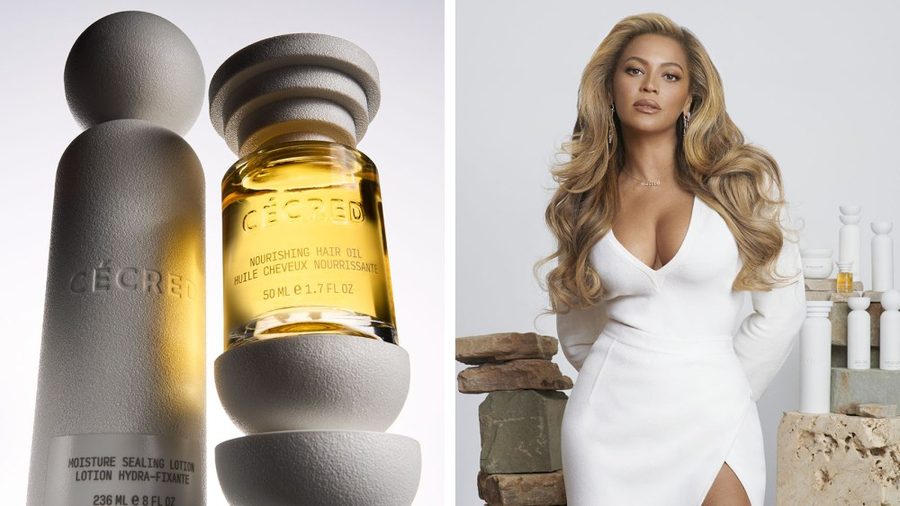
The Ivy Park Reference Point
Ivy Park launched as a partnership between Beyoncé and Topshop in 2016, then relaunched as Ivy Park with Adidas in 2019. The Adidas partnership was, by any conventional measure, a remarkable commercial arrangement. The line generated revenue estimated in the hundreds of millions of dollars annually at its peak, with Beyoncé commanding royalty and revenue share arrangements that made her one of the highest-earning celebrity brand partners in the fashion and athleisure category.
The partnership ended in 2023. The precise terms of the separation were not disclosed, but what became clear in the aftermath was the structural limitation that had been present throughout: Beyoncé held a revenue share, not equity. When the partnership ended, the value of Ivy Park as a brand did not flow to Beyoncé. It flowed back to Adidas, which retained the brand IP and all associated assets. Years of Beyoncé's cultural capital invested in building the brand's awareness and desirability produced, for Beyoncé, a check for her royalty share while the partnership lasted — and nothing when it ended.
This is not a criticism of the deal structure. In 2019, a partnership with Adidas at that revenue level was an exceptional arrangement. But the Cécred launch, in February 2024, demonstrated what Beyoncé's team had concluded by the time that arrangement concluded: the royalty model, regardless of scale, is structurally inferior to full equity ownership for a celebrity whose audience is large enough and loyal enough to support an independent brand.
The Ownership Mathematics
The comparison requires running two scenarios in parallel. Scenario one: Ivy Park with Adidas at peak revenue of, say, $250 million annually. Beyoncé holds an estimated royalty and revenue share in the range of 10-15% of net sales. At 12% of net revenue on $250 million, that is $30 million annually — exceptional income, extraordinary by any standard other than the comparison that follows.
Scenario two: Cécred at independent scale. The brand is currently growing, with price points of $28-$95 positioning it in the premium tier of the Black hair care market. The Black hair care market in the United States alone is approximately $2.5 billion and growing globally as African-descent consumers gain purchasing power in international markets. The comparable exit Mielle Organics achieved — selling to Procter & Gamble in 2023 for a reported approximately $400 million — represents a reference point for what a premium, authentic Black hair care brand with meaningful revenue and cultural authority can achieve at exit.
If Cécred reaches $100 million in annual revenue — an ambitious but achievable target over three to five years given Beyoncé's audience — at 40% gross margin, EBITDA approaches $25-30 million after operating costs. At a 6x EBITDA multiple, the equity value is $150-180 million. Beyoncé holds 100% of that equity, not 12% of someone else's. At $200 million revenue — achievable in a longer horizon given the brand's positioning and the growth of the global Black hair care category — the equity value at an 8x strategic multiple crosses $500 million. All Beyoncé's. Not split with a corporate partner who retains the IP when the arrangement ends.
Why Cécred's Positioning Is Defensible
The brand pillar that makes Cécred structurally sound is not Beyoncé's fame. It is Beyoncé's documented personal relationship with the product category. The brand's origin story is rooted in her grandmother's salon in Houston and Beyoncé's own hair history — including the damage sustained from years of styling and chemical treatments required for her career. This is not a constructed narrative. It is a verifiable personal history that gives the brand a founder story that functions as a genuine differentiator rather than a celebrity endorsement dressed up as ownership.
The Black hair care market rewards authenticity acutely. Consumers in this category have been subjected to decades of brands that claimed cultural authenticity while being owned and operated by corporations with no genuine connection to the community. The consumer skepticism is informed and rigorous. A brand that survives that scrutiny — and Cécred has, with product quality reviews that consistently hold up under the community's forensic testing — has established credibility that no amount of marketing spending can manufacture for a brand that doesn't deserve it.
The price points ($28-$95) stake a premium claim that is justified by formulation quality and manufacturing. They sit above mass market anchors like SheaMoisture and below ultra-luxury tiers that serve a narrower consumer. The accessible premium positioning in a category where the consumer is spending real money on a genuine problem — maintaining the health of hair types that mainstream beauty has historically underserved — is where the largest revenue opportunity lives.
The Structural Lesson for Celebrity Brand Architecture
The Cécred case study teaches a specific structural lesson that applies to every celebrity considering a brand partnership versus an owned brand: the compounding difference between a revenue share and equity ownership is not linear. It is exponential over time.
A $30 million annual royalty payment is a liability on a corporate balance sheet. It ends when the partnership ends. It does not compound. It does not build an asset that can be sold, inherited, or used as collateral. It is income — excellent income, but income without the equity appreciation that transforms income into generational wealth.
Equity in a growing brand compounds. The value of a $100 million revenue brand at a 6x EBITDA multiple is not just the current year's multiple — it is every future year's contribution to an asset that can be sold at a point when the celebrity chooses, to a buyer who values the brand's future revenue, not just its current royalty stream. The family wealth implications of these two paths, over a twenty-year horizon, are not comparable.
This is the calculus Beyoncé's team ran when they structured Cécred as a fully independent, wholly owned brand rather than a partnership. And it is the calculus that every LatAm celebrity has the opportunity to run right now — before their category positions are claimed by competitors who understand the math.
The Korean Manufacturing Parallel
Cécred's manufacturing is not publicly disclosed in full detail, but the brand's quality signals — the texture of formulations, the efficacy consistency across product lines, the ingredient quality — are consistent with a manufacturing partner operating at the top of the professional beauty production industry. This matters because it demonstrates that independent celebrity brands, fully owned by their founders, can access manufacturing quality that rivals what major corporate partnerships provide — sometimes at more favorable economic terms.
In beauty, Korean ODM manufacturers provide the same structural advantage. Korea's top-tier OEM/ODM houses — the same labs that power the world's most recognized K-beauty brands manufacture for global prestige brands. Accessing them through an independent brand structure rather than a corporate partnership means the celebrity captures all the margin the corporate partner would otherwise absorb. The manufacturing quality is equivalent. The economics flow entirely to the founder.
Cécred demonstrates that this model is viable at the top of the celebrity market. Starpower's thesis is that it is equally viable for LatAm celebrities whose audiences are smaller in absolute terms but equivalent in engagement intensity, purchasing intent, and cultural authority in their specific geographies. The model scales down from Beyoncé's level more cleanly than most people assume, because the financial model does not require Beyoncé's audience size to produce transformative equity outcomes. It requires authentic category authority, product quality, and time.
Who Is Next
Cécred is the proof of concept for fully independent celebrity beauty brand ownership at scale. It is not the only proof of concept — Rare Beauty, Fenty, and others demonstrate the model across different categories and price points. But Cécred is the most instructive because it came directly after a major corporate partnership, making the comparison explicit and the lesson unambiguous.
The celebrities who study this case study and ask "what is my equivalent of this opportunity?" are asking the right question. The categories that remain available — the ones where LatAm celebrity authority is genuine and where consumer demand is growing faster than supply — are not hard to identify. Glass skin for Latina consumers. Korean hair care for the Brazilian market. Fermented ingredient skincare rooted in a celebrity's documented personal routine. These are Cécred-equivalent opportunities, in different geographies, available to the founders who move now.
The question Cécred forces onto the table is not "can celebrity founders build valuable independent brands?" That question is settled. The question is: who is making the decision right now to own 100% of something that will be worth something — rather than receiving a royalty on someone else's asset that they will never own?